If you earned money on the side last year, 31 January 2027 is a date to put in the diary now. Not on 30 January at 11pm with a cold cup of tea.
I'm a dad with a job and a side hustle, not an accountant, so this is a plain guide to the basics. Check gov.uk for your own situation, and ask an accountant if it's complicated.
Which tax year is this for?
This catches people out. The deadline on 31 January 2027 is for the 2025/26 tax year, which ran from 6 April 2025 to 5 April 2026.
So you're reporting what you earned last tax year, not this one. This year's money (6 April 2026 to 5 April 2027) goes on the next return, due by 31 January 2028.
Do you need to file one?
Broadly, if your gross self-employed income for the tax year was over £1,000, you need to register for Self Assessment and send a return. That's before any costs come off. If it was £1,000 or under, you usually don't, though there are exceptions.
Other things can also mean you need one, so if you're not sure, use the tool on gov.uk that checks whether you need to send a tax return.
The dates that matter
- 5 October 2026: the deadline to tell HMRC you needed to register. That's passed now.
- 30 December 2026: if you want to pay a bill through your tax code, you need to file online by this date.
- 31 January 2027, 11:59pm: file your online return and pay what you owe.
- 31 July 2027: the second payment on account, if you have one (more on that below).
Missed 5 October? Don't panic, but don't sit on it. Register as soon as you can. HMRC will give you a later date to file, which is 3 months from the date on their letter or email. But you still need to pay any tax you owe by 31 January 2027, or you'll get a penalty.
What a late return costs
This is why I wouldn't leave it.
- £100 straight away if your return is late, even if you owe nothing
- After 3 months, £10 a day on top, up to £900
- After 6 months, another 5% of the tax due or £300, whichever is greater
- After 12 months, the same again
Paying late is separate. You get 5% of the unpaid tax added at 30 days, 6 months and 12 months, plus interest.
What you'll need
- Your income for 6 April 2025 to 5 April 2026, from every app or customer.
- Your costs. Either your actual expenses, or the £1,000 trading allowance, or flat-rate mileage if you drive. You pick one route. The mileage rate for last tax year was 45p a mile for the first 10,000 miles, then 25p. The 55p rate only started on 6 April 2026.
- Your login. If you've not used Self Assessment before, you'll need a Unique Taxpayer Reference, which comes by post. That takes time, which is another reason not to leave it late.
- Your other info. Things like your job's P60, bank interest and so on.
If you didn't keep records last year, don't guess. Go through your bank statements and app earnings summaries, and work it out properly.
Payments on account, in plain English
This is the bit that gives people a nasty shock.
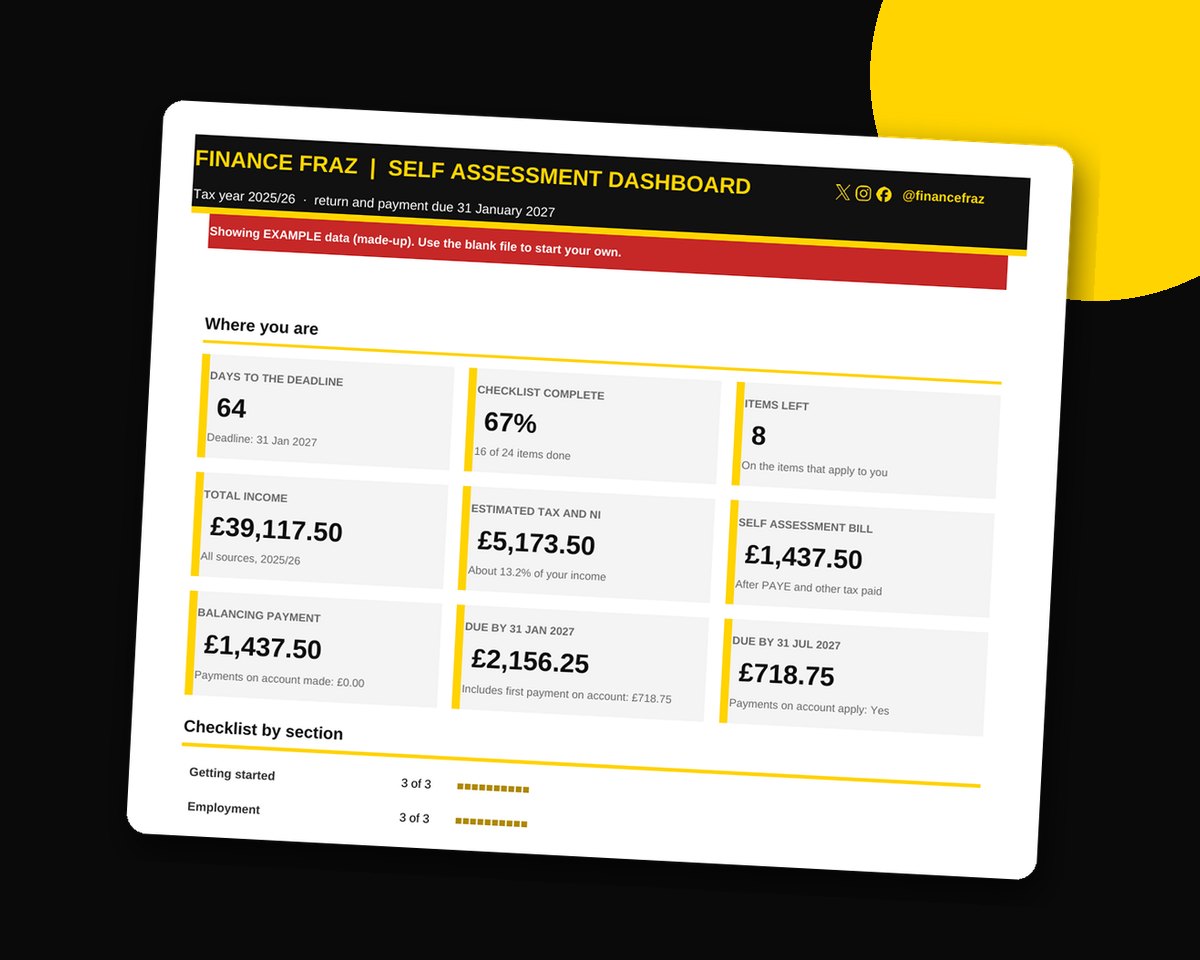
Payments on account are advance payments towards your next tax bill. They're two instalments, each half of the tax you owed for the year just gone. One is due on 31 January, the other on 31 July.
Here's a made-up example. Say your tax bill for 2025/26 comes to £1,500, and this is your first return.
- By 31 January 2027, you pay the £1,500 you owe, plus your first payment on account of £750 (half of £1,500). That's £2,250 in one go.
- By 31 July 2027, you pay a second payment on account of £750.
If your 2026/27 bill turns out higher than £1,500, you pay the difference as a balancing payment next January. If it's lower, you may get some back.
You don't have to make payments on account if your tax bill for the year was under £1,000, or if you paid more than 80% of your tax some other way, for example through your tax code at your job.
Plenty of people with a small side hustle and a PAYE job fall under one of those. If you don't, set some money aside so January doesn't bite.
A simple plan
- Work out if you need to register. If you do, do it now.
- Gather your income and costs for last tax year.
- Compare the trading allowance, actual costs and mileage, and use whichever leaves you with less tax.
- File early. You can file any time after 6 April.
- Put the tax money aside now, in a separate pot.
- Start tracking this year's income properly from day one.
Make next year easier
That last one is the one I'm most keen on. If you start logging your income and miles now, next January is a ten-minute job instead of a weekend of panic.
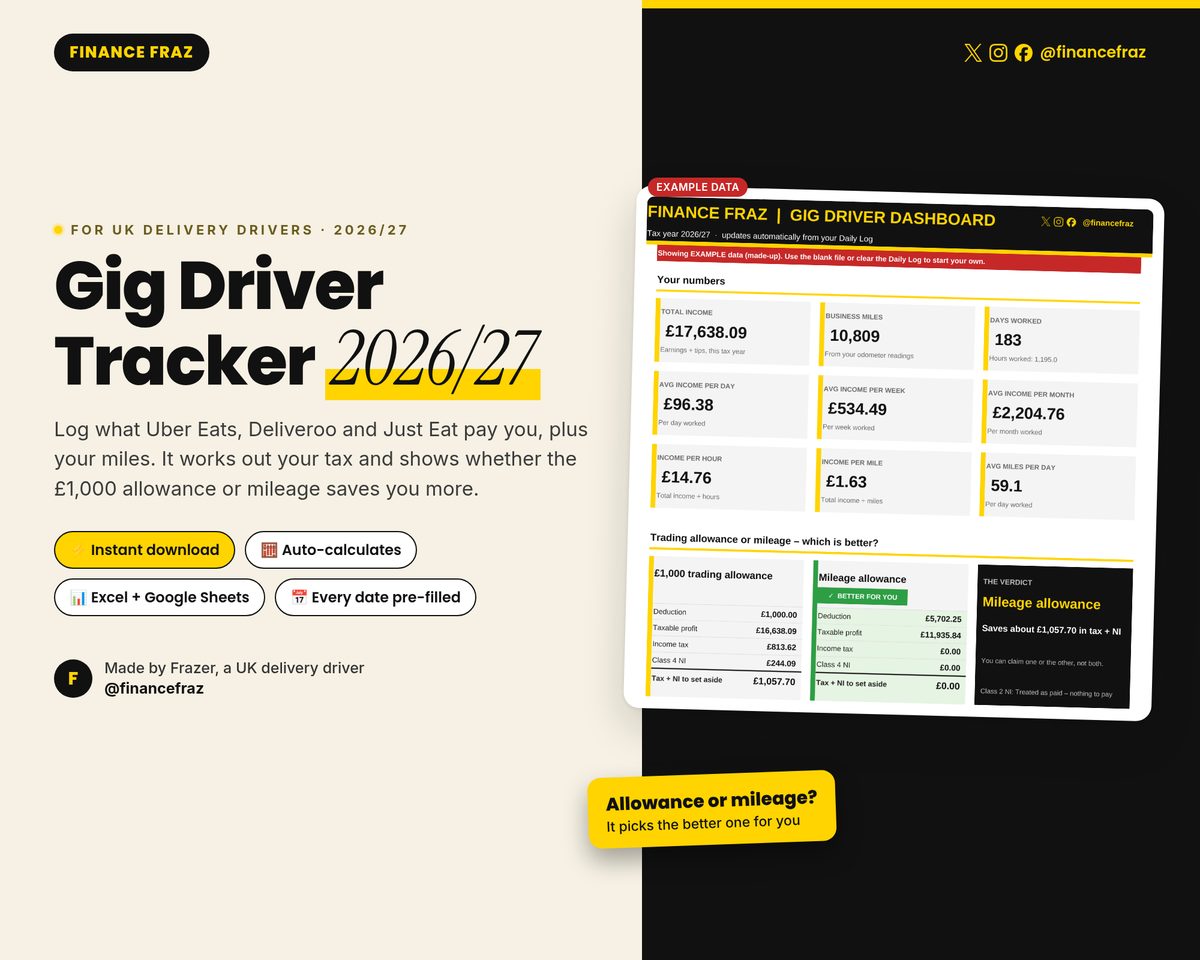
I'm building a Side Hustle Tax Tracker for exactly this, and it's coming in January. If you deliver, my Delivery Driver Tax Tracker already does it for 2026/27.
Not financial or tax advice. I'm not an accountant or a regulated adviser, I'm a UK dad sharing how this works. The figures are for the 2026/27 tax year unless I say otherwise, and rules change, so check gov.uk or ask an accountant about your own situation.